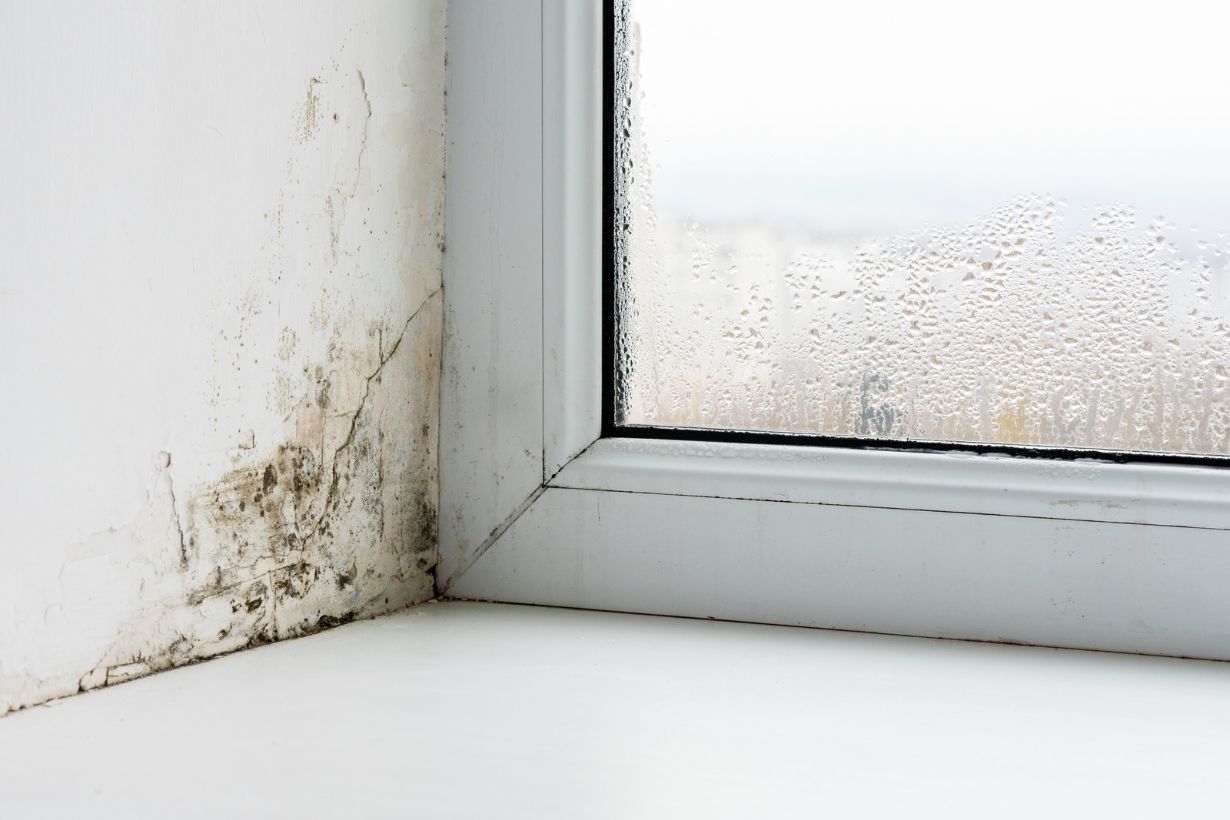
As temperatures drop, you may notice condensation on windows, damp patches on walls or mould appearing in your home. Here are some simple steps to help manage moisture, prevent mould and keep your home warm.
What causes condensation?
Everyday activities such as cooking, showering and drying clothes release moisture into the air.
Condensation forms when warm, moist air meets a cold surface, such as a window, wall or mirror. If left untreated, it can lead to damp and mould.
Common places for condensation include:
- Windows and external walls
- Corners of rooms
- Behind furniture and inside wardrobes
Why is damp and mould a problem?
Condensation is one cause of damp, but damp can also result from leaking pipes, damaged roofs or gutters, and other building problems. These need investigation and repair.
Damp and mould can:
- Make your home feel colder and harder to heat
- Damage walls, furnishings and decorations
- Cause unpleasant smells
- Affect your health, particularly if you have a respiratory condition such as asthma
Young children, older people and those with existing health conditions can be particularly vulnerable.
Practical ways to reduce moisture in your home
When cooking
Cooking releases steam into your home. To reduce moisture:
- Keep lids on saucepans
- Use an extractor fan or open a window slightly
- Keep the kitchen door closed to stop steam spreading
When bathing or showering
Bathrooms are another major source of moisture. Try to:
- Use an extractor fan during and after bathing or showering
- Open a window if it is safe to do so
- Keep the bathroom door closed while the room dries out
When drying clothes
Drying clothes indoors can add moisture to the air.
Where possible:
- Dry clothes outside when the weather allows
- Use the fastest suitable spin cycle on your washing machine
- Avoid drying clothes directly on radiators
- If drying indoors, choose a ventilated room and keep the door closed
If you use a tumble dryer, make sure it’s properly vented outside or uses a suitable condenser system.
Improve airflow around your home
Condensation is more likely where air cannot circulate freely.
You can improve airflow by:
- Leaving a small gap between furniture and external walls
- Avoiding overfilling wardrobes and cupboards
- Opening wardrobes occasionally to allow air to circulate
- Keeping air vents clear and unobstructed
- Keeping window trickle vents open, where fitted
Good ventilation helps remove moisture before it settles on cold surfaces.
Keep your home warm
It might seem like turning the heating off entirely will save money, but very cold rooms are more likely to develop condensation and mould.
Where possible:
- Heat the rooms you regularly use to at least 18°C. Some people, particularly those with health conditions or reduced mobility, may need a warmer temperature
- Heat rooms that are prone to damp
- Close curtains at dusk to retain warmth
- Draught-proof windows and doors without blocking ventilation
Keeping your home warm helps prevent condensation forming on cold surfaces.
Improving insulation can help
Cold walls and surfaces make condensation more likely.
Home improvements such as:
- Loft insulation
- Cavity wall insulation
- Floor insulation
- Draught-proofing
can help your home stay warmer, reduce the risk of condensation and potentially lower energy bills.
Important: When draught-proofing or insulating your home, never block airbricks, extractor fans, trickle vents or ventilation needed for heating appliances. Good ventilation is essential for managing moisture and keeping your home sate.
What if mould has already appeared?
If you spot small areas of mould, clean them as soon as possible to help stop spores spreading. Always follow appropriate cleaning guidance and take care to protect yourself when dealing with mould.
However, if mould continues to return, there may be an underlying issue such as inadequate ventilation, persistent condensation or another source of damp that needs further investigation.
Where to get support
If you're concerned about damp, mould or keeping your home warm, support is available.
Bath & North East Somerset Council has produced a range of information and resources through its Damp, Mould and Cold Homes initiative, including advice for residents, students and frontline professionals.
You can also find practical guidance from the Centre for Sustainable Energy (CSE) on preventing damp and mould and improving energy efficiency at home.
For local advice and support, explore our range of services available to help residents stay warm, healthy and energy efficient.